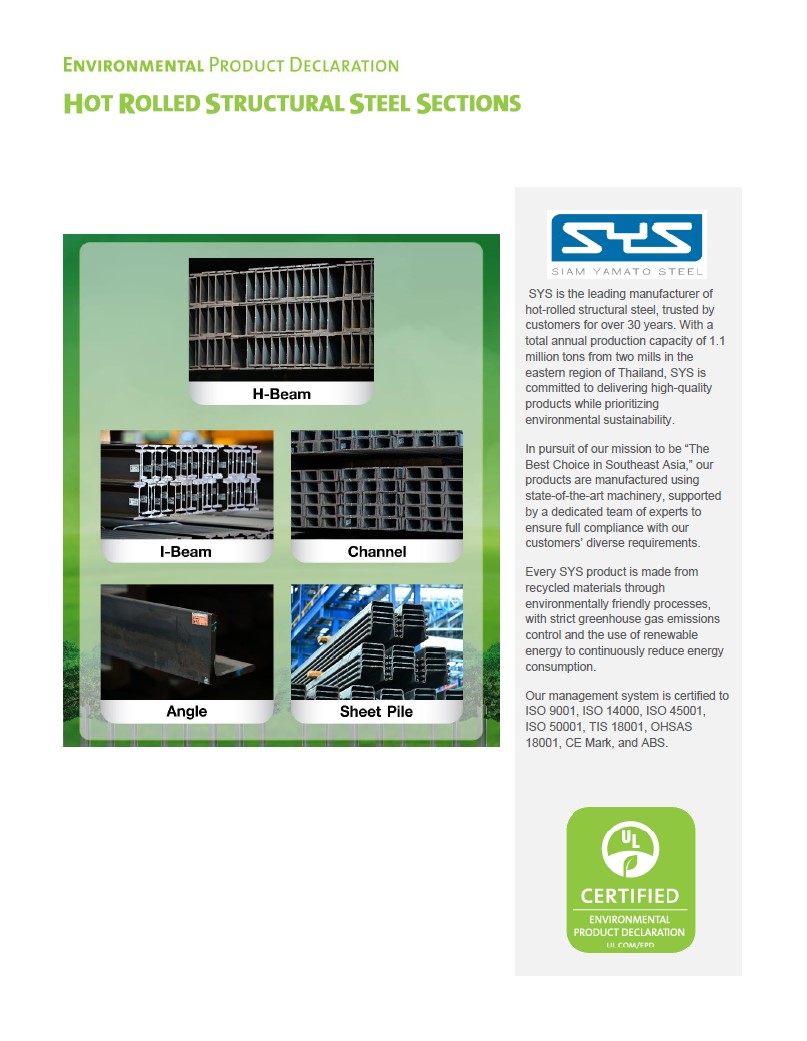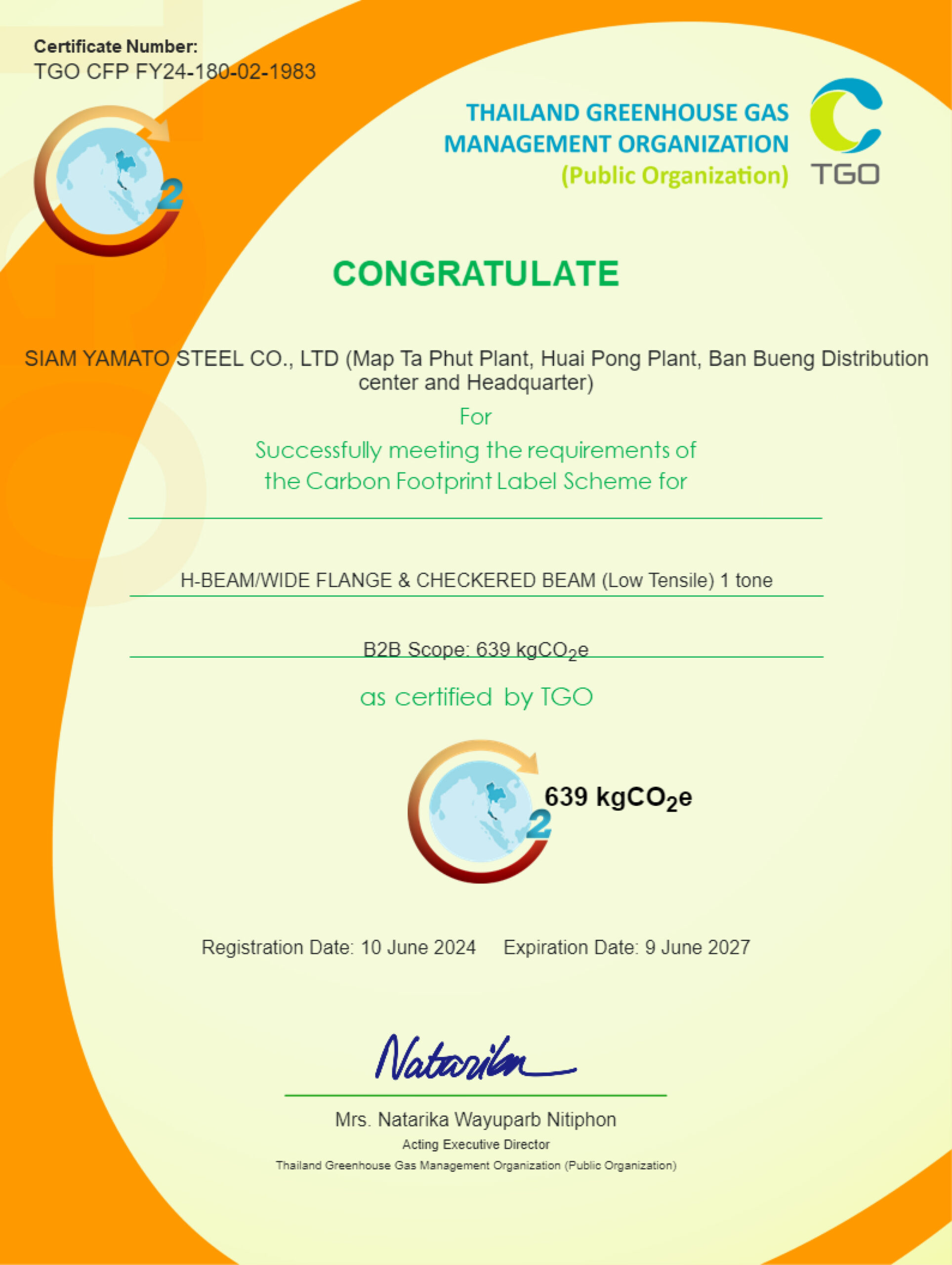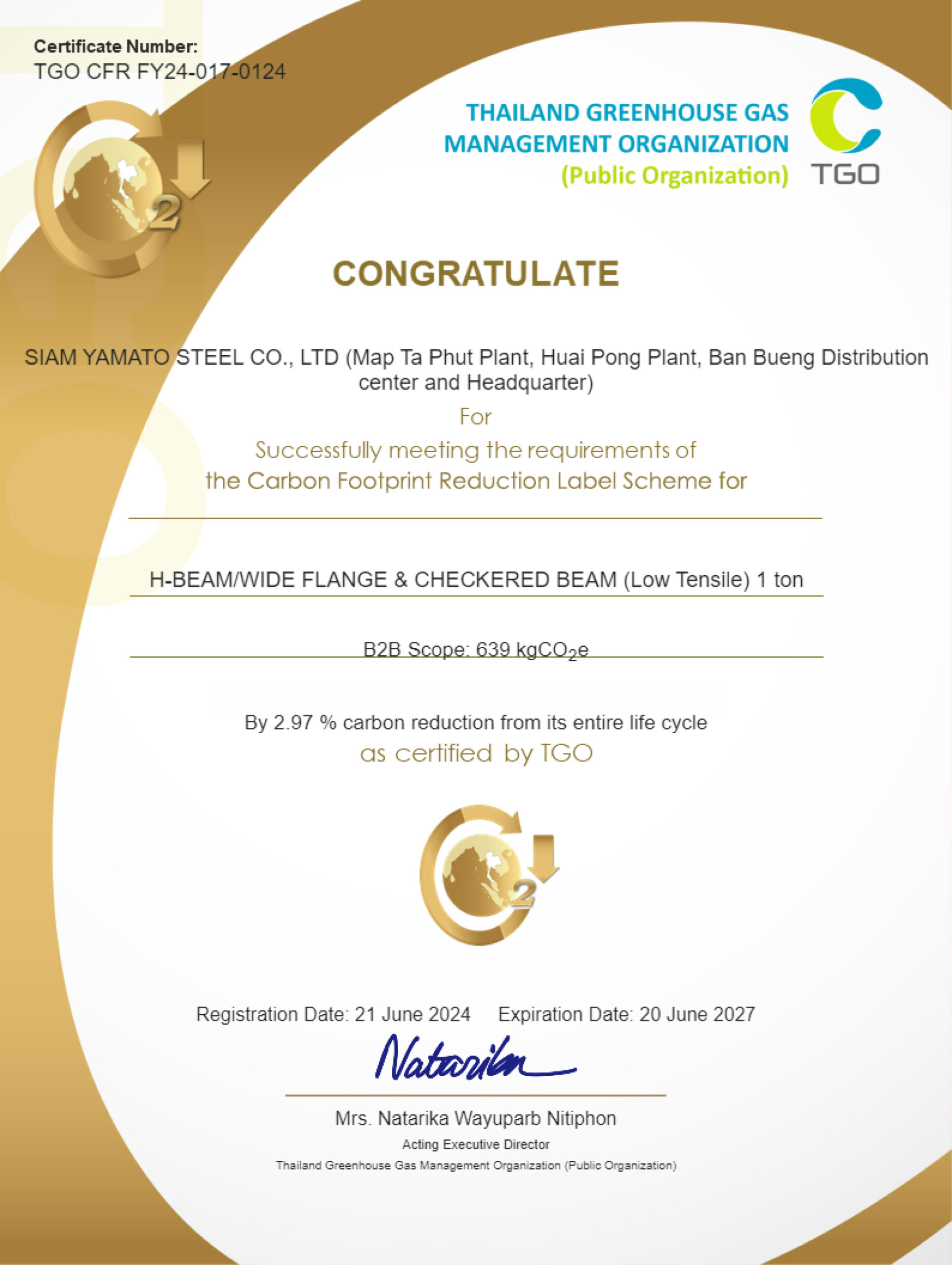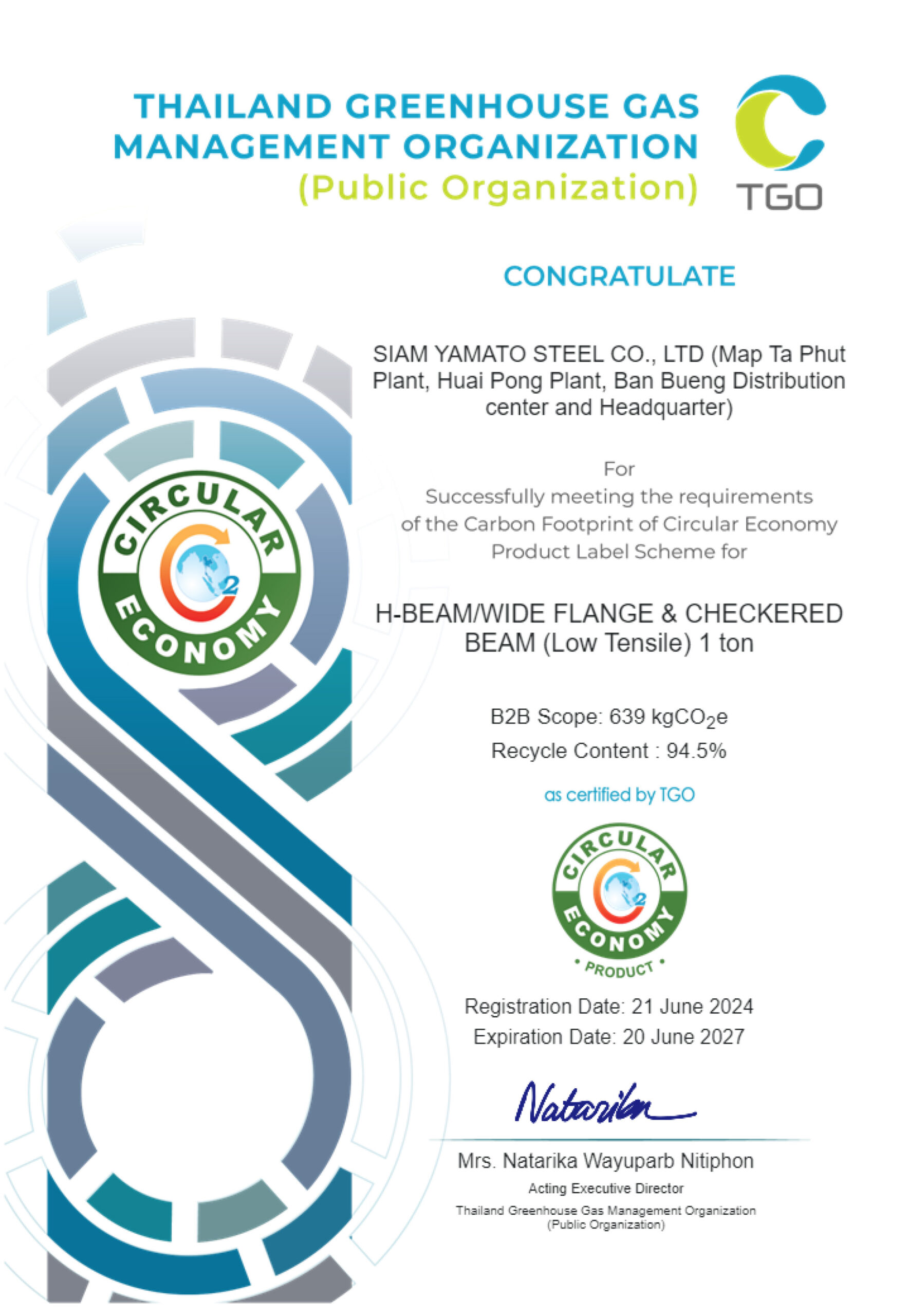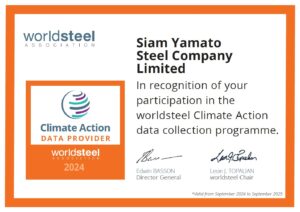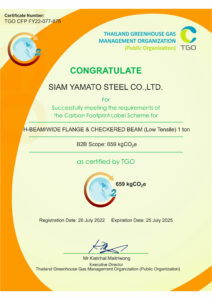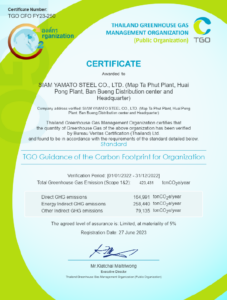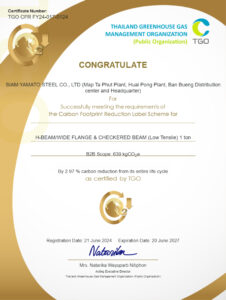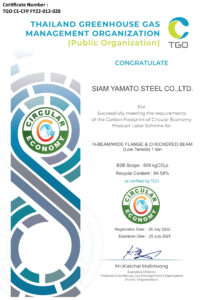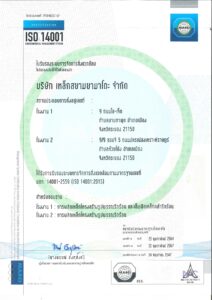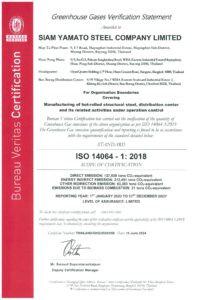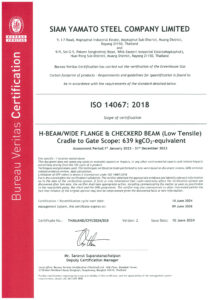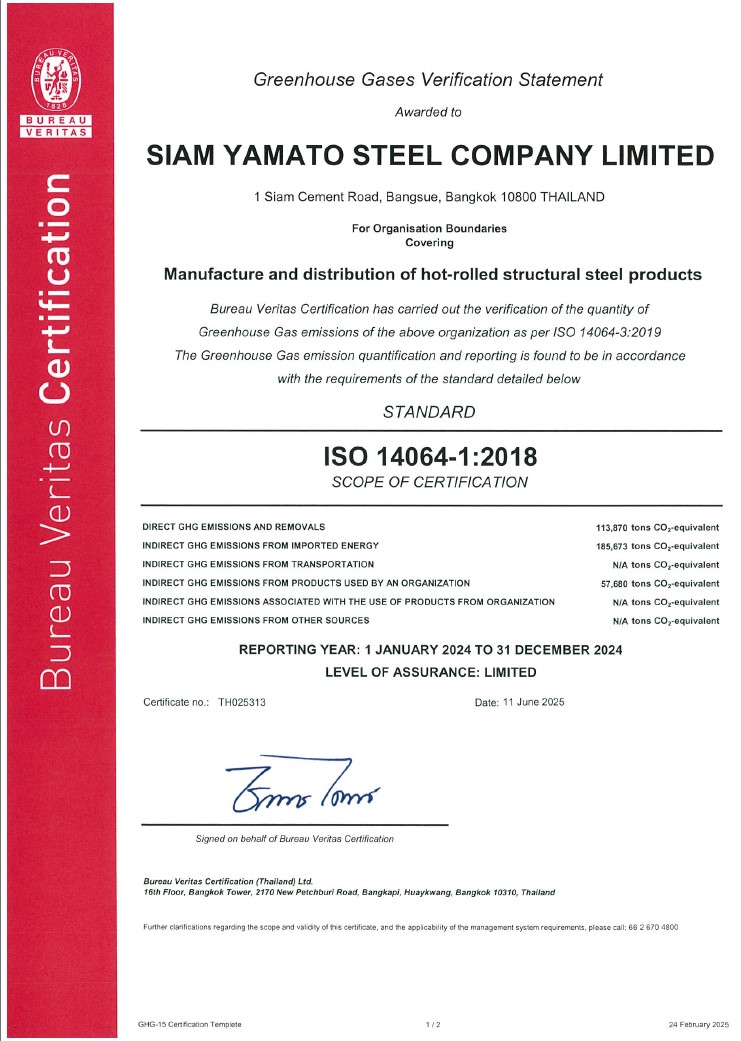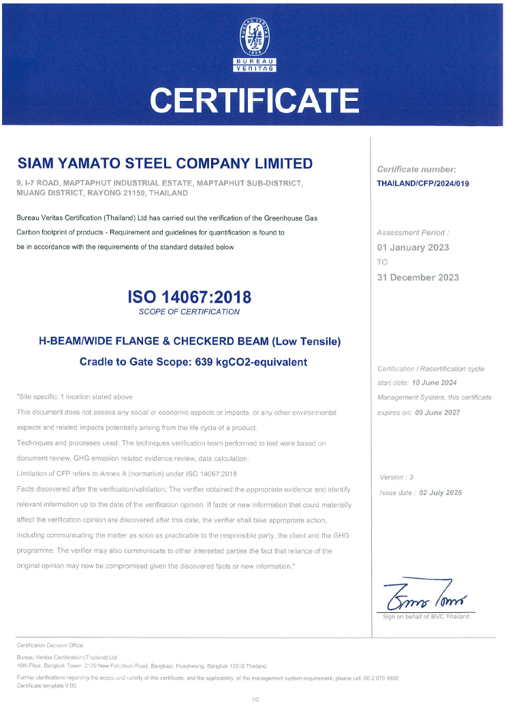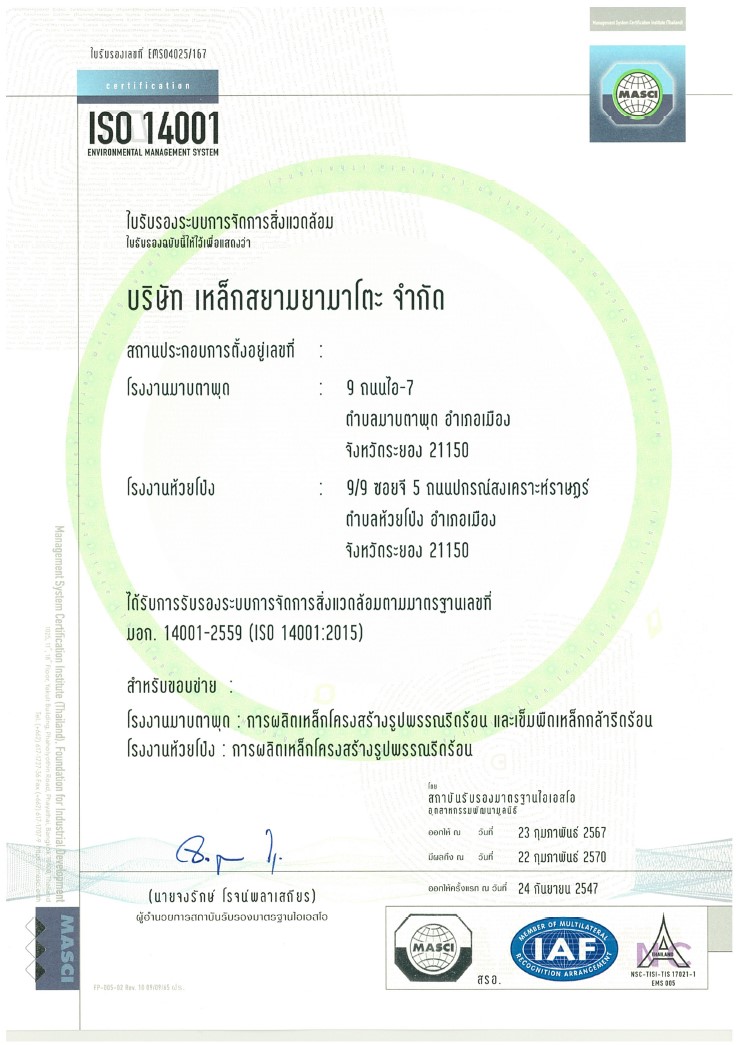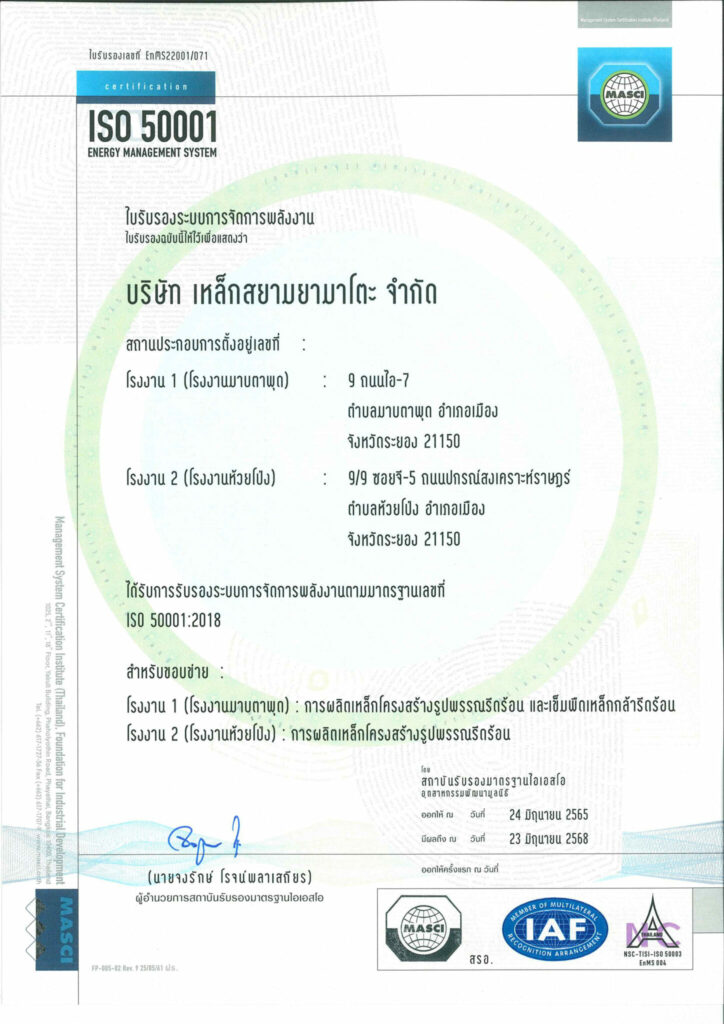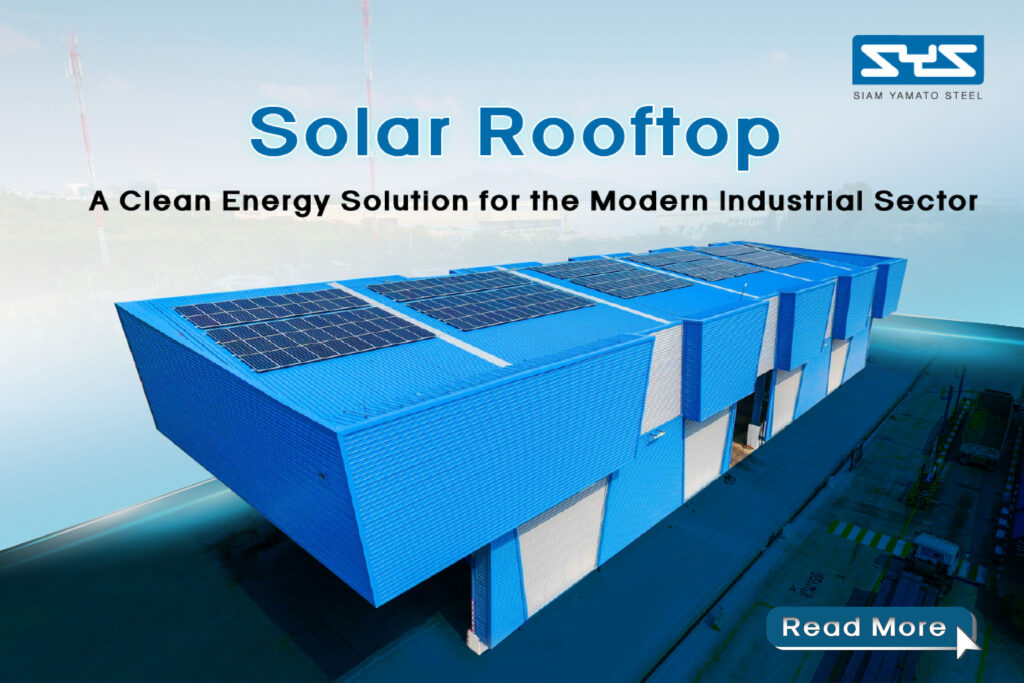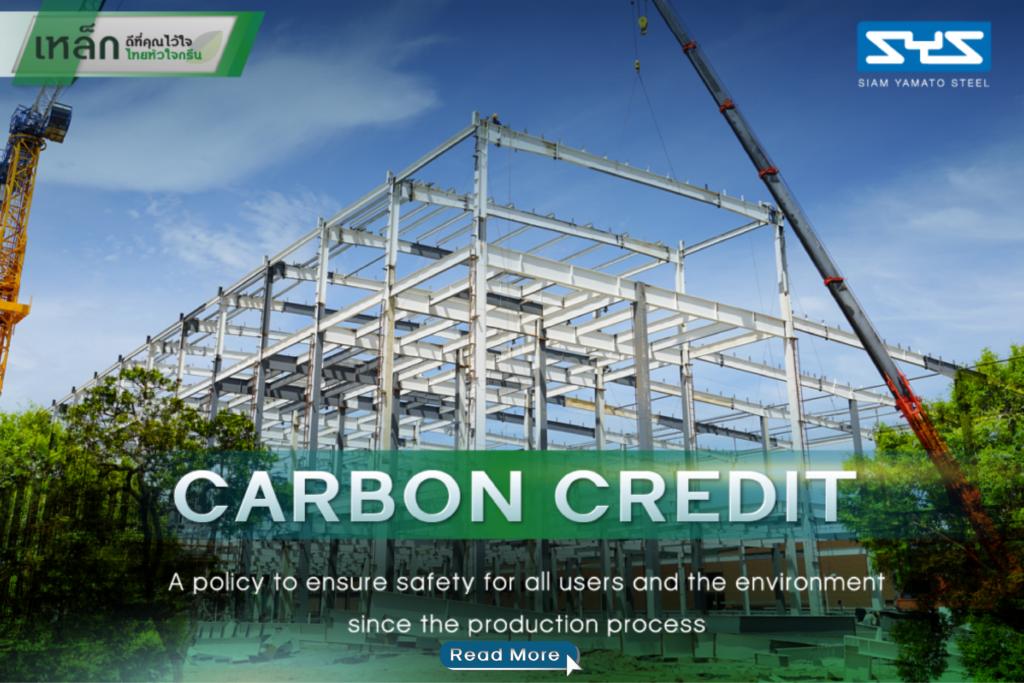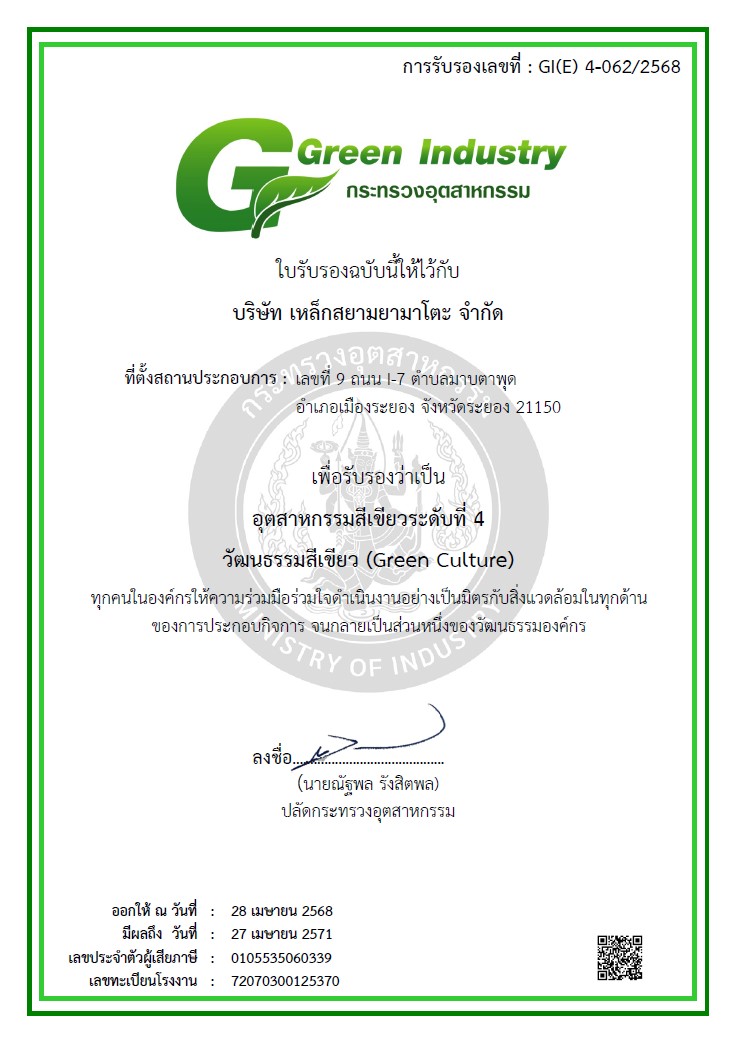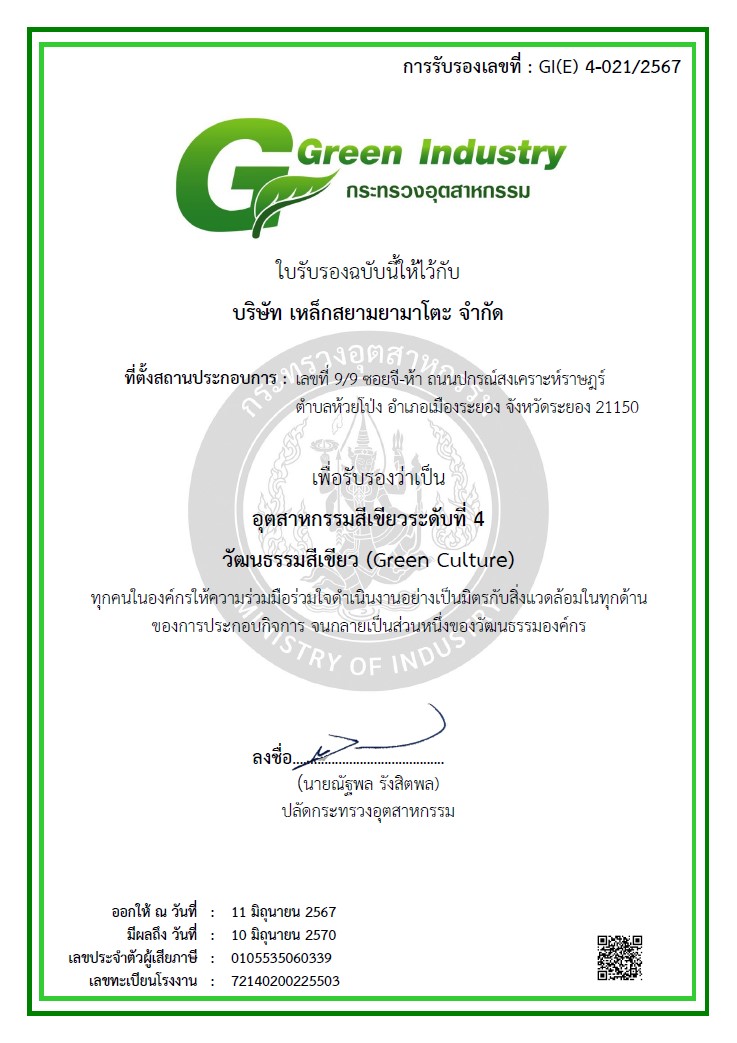
SYS has emphasized on product quality along with environmental stewardship. The company is responsible to society and communities in terms of alternative energy. SYS uses Solar Cell panels to reduce the energy used to generate electricity. SYS has continually recognized the importance of air, monitoring equipment and dust removal systems at the factory shafts.
H-BEAM steel from SYS is qualified steel material
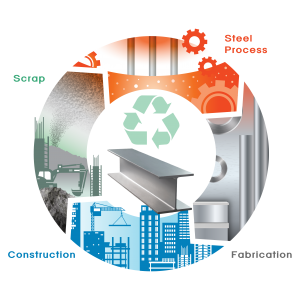
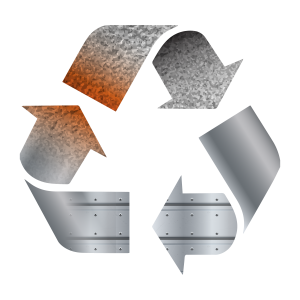
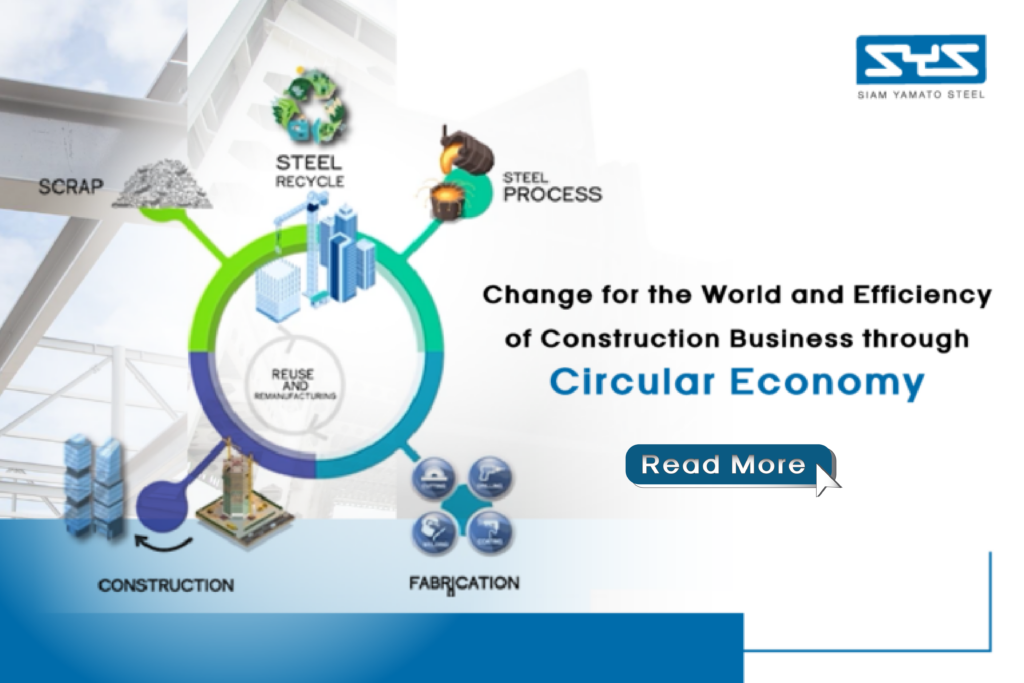
It is known as Green Building Material according to the principle of 3R (Reduce-Reuse-Recycle) that can be recycled and recycled 99%.
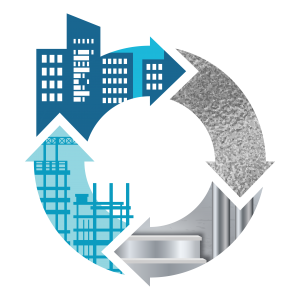
It is the circular economy of raw materials and products to optimize resource efficiency, reduce dependence on natural resources and create sustainable value for the organization and its stakeholders.
R1 – Reduce
Limit material consumption, increase cost-effectiveness
R2 – Reuse
Reusable structure
R3 – Recycle
100% recycle
EAF steel production process from 100% recycled raw materials.
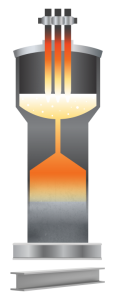
EAF or Electric Arc Furnace is SYS steel manufacturing process by Arc welding method, selecting 100% recycled steel raw materials for remelting with electric power through chemical composition control to meet advance standards.
Electric Arc Furnace (EAF) will be able to control the quality of steel more precisely. Structural steel is of high quality and energy saving compared to other steel fabrication technologies.
In addition to the production process of SYS with EAF (Electric Arc Furnace) design, high-quality structural steel is obtained, it is also an environmentally friendly production process.
It is a manufacturing process that uses iron to melt using electricity. It emits less carbon dioxide (CO2) than the Blast Furnace process, which uses iron ore to smelt and use coal for energy. SYS’s production plays a part in reducing greenhouse gas emissions and conserving the environment as much as possible.
EAF
SYS Decarbonization Roadmap toward Net Zero Emissions
SYS places importance on conducting business with environmental responsibility. The company has developed the SYS Decarbonization Roadmap toward Net Zero Emissions as a directional framework for reducing greenhouse gas emissions under Scope 1 and Scope 2. The roadmap uses 2013 as the base year for comparing emission intensity, in line with Yamato Group, SYS’s parent company, which uses the same baseline for companies within the group.
Under this roadmap, SYS aims to continuously reduce its greenhouse gas emission intensity through key initiatives such as improving energy efficiency, increasing the use of renewable and clean energy, exploring lower-carbon alternative raw materials, considering low-carbon and alternative fuel options, and monitoring future technologies such as Hydrogen Fuel and CCUS. These initiatives are intended to support the company’s long-term direction toward Net Zero Emissions by 2050.
The roadmap should be viewed as a guiding framework that may be adjusted as appropriate, depending on technology readiness, cost, business conditions, and relevant future requirements.
In addition, SYS also recognizes the importance of reducing Scope 3 greenhouse gas emissions across its supply chain. The company aims to promote collaboration with suppliers and relevant stakeholders to better manage environmental impacts and jointly contribute to the transition toward a low-carbon society.